Protecting Our Precious Petals: A Battle Against Beetles
Petoskey Grown Garden Wedding Roses
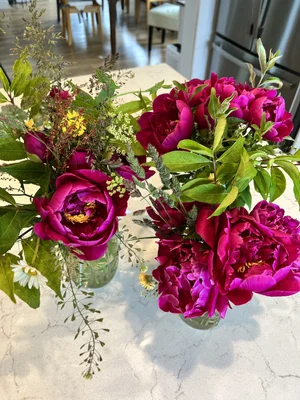
Here at Hilltop House Farm, nestled in the heart of northern Michigan, our garden roses are more than just beautiful blooms; they're the stars of our wedding florals, gracing everything from delicate bouquets to breathtaking centerpieces. Their exquisite fragrance, lush petals, and romantic charm make them an absolute dream for couples tying the knot.
But, as any rose enthusiast knows, cultivating these beauties comes with its challenges. And for us, in the peak of summer, that challenge often arrives in the form of unwanted, leaf-munching guests: the rose chafer and, later in the season, the infamous Japanese beetle.
These beetles can decimate a perfect bloom in a matter of hours, turning a vibrant, velvety rose into a tattered mess. For a farm like ours, where the beauty of our roses directly impacts the magic of a wedding day, this is a battle we take very seriously!
Our Strategy: The Power of Protection (and a Little Patience!)
Over the years, we've experimented with various methods to protect our cherished garden roses, and we've found a few key strategies that truly make a difference, especially for our wedding-bound blooms:
The Organza Advantage: Our Secret Weapon! This might sound a little unconventional, but for our most prized blooms destined for wedding bouquets and arrangements, we swear by organza bags. As soon as a rose bud begins to show color, we gently slip a small organza bag over it, securing it loosely at the base. This acts as a physical barrier, preventing those hungry beetles from ever reaching the delicate petals. It's a bit time-consuming, yes, but the payoff of perfect, unblemished roses is absolutely worth it for those special occasions. We source ours in various sizes to accommodate different rose varieties.
Daily Patrols and Early Detection: Even with our organza arsenal, vigilance is key. Every morning, bright and early, our team is out in the rose garden, carefully inspecting each plant. Rose chafers are typically active in late spring and early summer, while Japanese beetles make their appearance a bit later, usually in July. Catching them early is crucial. We hand-pick any beetles we find and drop them into a bucket of soapy water. It's not the most glamorous job, but it's effective!
Understanding Beetle Behavior: Knowing when these pests are most active helps us tailor our protection efforts. Rose chafers tend to be more active during the day, while Japanese beetles are also daytime feeders. We've noticed they're particularly fond of the sunniest spots in the garden.
Why We Prioritize Non-Chemical Solutions
As a farm committed to sustainable practices and providing healthy, beautiful flowers, we always strive for the most environmentally friendly solutions. We avoid harsh chemical pesticides, especially on flowers that will be in close contact with people at weddings. Our focus is on physical barriers and manual removal, which keeps our roses, our farm, and our clients happy and healthy.
It's a continuous dance with nature here at Hilltop House Farm, but the joy of seeing our magnificent garden roses transformed into stunning wedding florals makes every effort worthwhile. We believe that the beauty of a rose, untouched by pests and grown with care, truly shines through on a couple's special day.
Do you have any tips or tricks for keeping your roses beetle-free? We'd love to hear them.